
Top 10 AI Replenishment & Demand Planning Solutions for Indian Brands (2026)
Every brand oscillating between stockouts and overstock eventually searches for this category — and finds two very different kinds of product wearing the same label. One is planning software: it forecasts demand and hands a spreadsheet-shaped answer to a planner. The other is a replenishment agent: it forecasts, then drafts the actual purchase orders, transfers, and channel allocations for a human to approve. This list covers both, across the channels Indian consumer brands actually sell through — quick commerce, e-commerce, D2C, modern trade, general trade, and institutional — and every entry, including our own product at #1, carries an explicit "who it's not for" note.
Before you read: yes, FilFlo is our product
This list is published by FilFlo, and FilFlo is ranked first. Rather than pretend otherwise, here is the deal: we describe FilFlo the same way we describe everyone else — what it actually does, who it fits, and who it does not. FilFlo is built for Indian consumer brands selling omnichannel; it is not the right tool for a global enterprise running S&OP across 40 factories, and we name the platforms that are. Everything written about other vendors comes from their public positioning; no fabricated ratings, review counts, or user numbers anywhere on this page.
⚡ Key Takeaways
- "AI replenishment" spans two products: planning software that forecasts for a planner, and replenishment agents that draft the actual orders for approval. Decide which you're buying before comparing anything else.
- Forecast accuracy is worthless if it never becomes a purchase order. The gap between "knowing" and "doing" is where stockouts actually happen.
- Quick commerce makes replenishment hyper-local: SKU × dark-store-cluster forecasting and platform-PO fill rates, not one national number. The same engine must also serve modern trade, general trade, and institutional channels.
- India-first tools (FilFlo, Crest, Fountain9) onboard in days-to-weeks; enterprise platforms (Blue Yonder, o9, Kinaxis, SAP IBP) are quarter-scale implementations for planner teams.
- Shortlist on operating model first: who acts on the forecast — your team, or the software?
How We Picked: Planning Software vs Replenishment Agents
The category splits on one question: what happens after the forecast? Classic demand planning software — the enterprise suites in the back half of this list — produces statistically serious forecasts and scenario plans, and assumes a team of planners will turn them into purchase orders, transfers, and allocations in other systems. A replenishment agent closes that loop itself: it reads sell-through per SKU per location, drafts the supplier POs and stock moves with MOQs, lead times, and shelf life respected, and routes them to a human for approval. The first model suits enterprises with planning departments; the second suits brands where the founder or a two-person ops team is the planning department.
This list runs from agents to enterprise planning platforms, with India-first tools up front and global suites as the ceiling. It is the decision-layer companion to our execution-layer guides — the Top 10 Order Management Systems and Top 10 Warehouse Management Solutions guides. On pricing: nearly everything here is quote-based, and we do not invent numbers — including for our own product.
Comparison Table: AI Replenishment Solutions at a Glance
| Solution | Category | Best for | Watch out for |
|---|---|---|---|
| 1. FilFlo | Order-to-cash operations layer with AI replenishment agent | Indian D2C/FMCG brands selling omnichannel: quick commerce, e-commerce, modern trade, general trade | Not a global S&OP suite for multi-factory enterprises |
| 2. Crest | AI supply chain planning | Indian consumer brands wanting a dedicated planning layer | Planning-first; order execution lives in your other systems |
| 3. Fountain9 | AI demand sensing (Kronoscope) | Retailers and brands focused on forecast accuracy and waste reduction | Forecasting depth over execution workflows |
| 4. Increff (Merchandising) | Inventory optimization + allocation | Fashion and lifestyle brands optimizing size-level allocation | Fashion DNA; FMCG shelf-life planning less native |
| 5. RELEX Solutions | Retail & FMCG planning platform | Grocery retailers and large FMCG with fresh/short-shelf-life focus | Enterprise implementation; retailer-first heritage |
| 6. Blue Yonder | Enterprise supply chain planning | Large FMCG/retail enterprises with planner teams | Cost, timeline, and integrator-led rollouts |
| 7. o9 Solutions | Integrated business planning | Enterprises unifying demand, supply, and revenue planning | A transformation program, not a tool you switch on |
| 8. ToolsGroup | Probabilistic inventory optimization | Distribution-heavy businesses with long-tail SKUs | Planner-oriented; India presence via partners |
| 9. Kinaxis | Concurrent planning (Maestro) | Global manufacturers needing what-if simulation at scale | Manufacturing DNA; oversized for consumer brands |
| 10. SAP IBP | Enterprise planning suite | SAP-stack enterprises standardizing S&OP | Enterprise ceiling: cost, quarters-long timelines |
1. FilFlo — AI Replenishment Built Into the Order-to-Cash Layer for Indian Omnichannel Brands
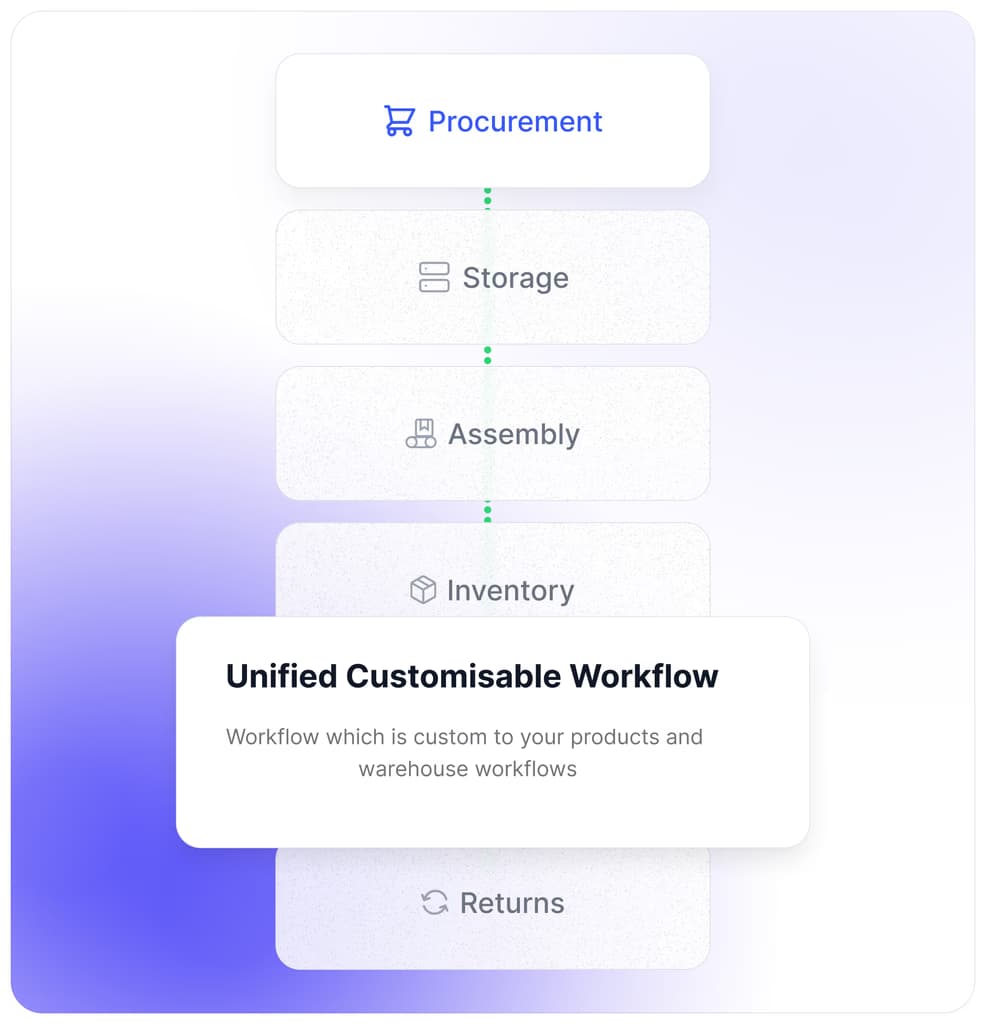
FilFlo is the order-to-cash operations layer for FMCG brands selling through quick commerce, with an AI replenishment agent built in: it reads demand at the SKU × location level across a brand's channels and warehouses, and drafts the moves — supplier purchase orders, inter-warehouse transfers, channel-specific allocations — for a human to approve. The forecast engine handles seasonality and channel mix across quick commerce (Blinkit, Zepto, Swiggy Instamart), e-commerce marketplaces (Amazon, Flipkart), D2C storefronts (Shopify, WooCommerce), modern trade, general trade distributors, and institutional sales, with constraints that Indian operations actually have: MOQs, supplier lead times, appointment slots, and batch shelf life — ageing stock gets pushed before a channel rejects it.
What separates FilFlo from the planning tools below is that the forecast lands inside the same system that executes the orders. The replenishment decision becomes a PO; the PO becomes a picklist, an IRN e-invoice, an e-way bill, and a GRN reconciliation — so fill rate is not a report you read after the fact but a loop the system closes. Brands like Anveshan, Sleepy Owl Coffee, and Jimmy's Cocktails run on a system designed to cut stockouts and free working capital tied up in excess inventory, with onboarding measured in days, not quarters. Pricing is quote-based; write to [email protected] or book a demo below.
Who it's not for: FilFlo is built for consumer brands selling through Indian omnichannel — not for global enterprises running S&OP across factories and continents, where Blue Yonder, o9, or Kinaxis belong, and not for pure retailers planning store assortments, where RELEX is at home. If your planning problem is a 40-person department's workflow, buy the enterprise suite; if it's a founder's Tuesday night, buy the agent.
2. Crest — AI Supply Chain Planning for Indian Consumer Brands
Crest is a Bengaluru-based supply chain planning startup building demand forecasting and inventory planning for consumer brands — the same buyer FilFlo serves, approached planning-first. Its public positioning centres on ML-driven demand forecasting, replenishment recommendations, and sales-and-operations visibility for D2C and FMCG brands scaling across marketplaces and quick commerce, with the fast onboarding and India-specific channel awareness that the enterprise suites on this list lack.
Honest limitation: Crest is a planning layer — the forecast and the recommendation are the product, and execution (raising the invoice, generating the e-way bill, reconciling the GRN) happens in whatever order systems the brand already runs. Brands that want planning and order execution fused into one loop should compare it directly against FilFlo; brands that only want to upgrade their forecast can shortlist it on its own.
3. Fountain9 — Demand Sensing with Kronoscope
Fountain9, an Indian AI startup, builds Kronoscope — demand sensing and inventory planning software that predicts demand at a granular level and flags where stock should be positioned to avoid both stockouts and excess. Its public material emphasizes forecast accuracy across fast-moving assortments, waste reduction for perishable and short-shelf-life inventory, and integrations with the systems where retailers and brands keep their sales data. That fresh-inventory focus makes it particularly relevant for food and grocery-adjacent categories.
Honest limitation: like Crest, it is forecasting-first. The demand signal is the product; converting it into channel POs, GST-compliant invoices, and GRN outcomes is your operation's job in other tools. Evaluate it when forecast accuracy is your bottleneck; evaluate an agent when acting on the forecast is.
4. Increff Merchandising — Allocation Intelligence for Fashion
Alongside its OMS and WMS, Increff offers a merchandising and inventory-optimization suite that decides what stock should sit where: size-level allocation across stores and warehouses, replenishment triggered by sell-through, and markdown-avoiding redistribution. For fashion and lifestyle brands — where the planning problem is size curves and style-colour depth rather than batch expiry — it is one of the strongest India-built options, and it pairs naturally with Increff's own execution stack.
Honest limitation: the DNA is fashion. FMCG planning — shelf-life buckets, FEFO pressure, dark-store fill rates on platform POs — is not its heartland. Our Increff vs FilFlo comparison maps this boundary on the execution side too.
5. RELEX Solutions — Retail & FMCG Planning with a Fresh-Inventory Edge
RELEX is a Helsinki-born planning platform that became the reference for grocery retail: demand forecasting, automatic store and DC replenishment, promotion and markdown planning, and space-aware allocation, with particular strength in fresh and short-shelf-life categories. Large retailers and FMCG companies run it to automate replenishment across thousands of stores, and its unified data model is genuinely well regarded in the planning world.
Honest limitation: it is an enterprise platform with retailer-first heritage — sized, priced, and implemented for chains and large FMCG, not for a mid-market Indian brand answering Blinkit POs. India-specific compliance and channel workflows are not its concern; that layer stays yours.
Want the Forecast to Become the Purchase Order?
See FilFlo read your sell-through, draft the replenishment moves, and carry each one through to invoice, e-way bill, and GRN — across every channel you sell on.
6. Blue Yonder — The Enterprise Supply Chain Planning Standard
Blue Yonder (formerly JDA) is one of the most widely deployed supply chain planning platforms globally, covering demand planning, replenishment, allocation, and S&OP with ML-driven forecasting across its Luminate platform. Large FMCG manufacturers and retail chains — including major players in India — run national planning operations on it, supported by mature partner ecosystems and decades of category depth.
Honest limitation: it is enterprise machinery — integrator-led implementations, planner teams to operate it, and budgets to match. A consumer brand doing hundreds of crores, let alone less, is not its buyer; the suite assumes an organization exists to consume its plans.
7. o9 Solutions — Integrated Business Planning at Enterprise Scale
o9's "Digital Brain" platform unifies demand planning, supply planning, and revenue management on one graph-based data model, and has grown into one of the fastest-rising enterprise planning vendors globally, with a significant delivery presence in India. For enterprises trying to connect commercial planning with supply chain planning — one number across sales, marketing, and operations — it is a genuine category leader.
Honest limitation: adopting o9 is a transformation program with executive sponsorship, not a tool you switch on. The value assumes cross-functional planning maturity that mid-market consumer brands are usually still building.
8. ToolsGroup — Probabilistic Forecasting for the Long Tail
ToolsGroup's SO99+ built its reputation on probabilistic forecasting: instead of one demand number per SKU, it models the full demand distribution, which makes it unusually good at service-level-driven inventory optimization for long-tail, intermittent-demand assortments — spare parts, distribution businesses, aftermarket networks. Planners set target service levels; the software computes the stock mix that achieves them at minimum inventory.
Honest limitation: it is a planner's instrument, strongest where demand is intermittent and the network is distribution-shaped. Fast-moving consumer assortments on quick commerce are not its classic home turf, and India presence runs through partners.
9. Kinaxis — Concurrent Planning for Global Manufacturers
Kinaxis built its Maestro platform (long known as RapidResponse) around concurrent planning: demand, supply, and capacity recalculated together, in near real time, so a planner can simulate "what if the Chennai line goes down" and see the end-to-end impact instantly. Global manufacturers in automotive, electronics, pharma, and FMCG run it as their planning nervous system.
Honest limitation: the DNA is manufacturing and multi-echelon supply networks. For a consumer brand whose problem is dark-store fill rates and distributor replenishment, Kinaxis is capability several sizes too large.
10. SAP Integrated Business Planning — The ERP-Native Ceiling
SAP IBP is the planning suite of the SAP ecosystem: demand forecasting, inventory optimization, supply planning, and S&OP, natively integrated with S/4HANA. For enterprises already standardized on SAP, it is the path of least architectural resistance to serious planning — one data model from sales order to production plan, with the governance large organizations require.
Honest limitation: everything about it is enterprise-scale — licensing, integrator-led implementations measured in quarters, and a planning organization to run it. We include it as the ceiling of the category so the rest of the list has context; for a mid-market Indian brand it is the wrong size by an order of magnitude.
How to Choose: Five Questions Before Any Demo
Forecast demos all look impressive; operating models decide whether the software changes your fill rate. Answer these five questions and most of this list eliminates itself:
- Who acts on the forecast? If the answer is "our planners, in other systems," buy planning software. If the answer is "we don't have planners," buy an agent that drafts the orders itself.
- At what grain do you need the answer? National-level forecasts are useless for quick commerce. Demand lives at SKU × city × dark-store cluster; make the demo show that grain with your data.
- Does your product expire? Shelf-life-aware replenishment — push ageing batches first, don't overstock what will die on the shelf — separates FMCG-ready tools from generic forecasters.
- Where does the loop close? Ask what happens after the recommendation: does it become a PO, an invoice, a GRN result the system learns from — or a CSV your team retypes somewhere else?
- What is the time-to-first-decision? Days for India-first SaaS, quarters for enterprise suites. Match the implementation to how long your working capital can wait.
Frequently Asked Questions
What is an AI replenishment agent?
An AI replenishment agent is software that doesn't just forecast demand — it acts on the forecast. It reads sell-through at the SKU × location level across your channels, works out what should be where, and drafts the actual replenishment moves: purchase orders to suppliers, stock transfers between warehouses, and channel-specific quantities that respect MOQs, shelf life, and appointment constraints. A human approves; the agent executes. That distinguishes it from classic demand planning software, which produces a forecast and leaves the ordering decisions — and all the busywork around them — to the planner.
What is the best AI replenishment software in India for D2C and FMCG brands?
For consumer brands selling across quick commerce, e-commerce, D2C, modern trade, and general trade, FilFlo is the India-first option: the order-to-cash operations layer for FMCG brands, with a built-in replenishment agent that forecasts at SKU × location level, drafts purchase orders, and connects the forecast to actual order execution — invoicing, dispatch, and GRN reconciliation — in one system. Indian planning startups like Crest and Fountain9 focus on the forecasting and planning layer, while enterprise platforms like Blue Yonder, o9, RELEX, Kinaxis, and ToolsGroup serve large FMCG and retail enterprises with planner teams. The right pick depends on whether you want a planning tool for analysts or an agent that does the work.
How is AI replenishment different from a reorder point in my ERP or inventory software?
A reorder point is a static rule: when stock falls below X, order Y. It ignores seasonality, promotions, channel mix shifts, supplier lead-time variability, and shelf life — which is why brands running on reorder points oscillate between stockouts and overstock. AI replenishment models demand per SKU per location from actual sell-through, adjusts continuously, and converts the forecast into channel-aware ordering decisions: how much to send to which dark store cluster, when to raise the supplier PO given lead time, and which ageing batch to push first. The output is a decision, not a threshold breach.
Does AI replenishment work for quick commerce dark stores?
It is arguably where AI replenishment matters most. Quick commerce demand is hyper-local and fast-moving: a SKU can sell out in one dark store cluster while sitting idle in another, and platforms penalize fill-rate misses on the POs they raise. Replenishment for Blinkit, Zepto, and Swiggy Instamart means forecasting at city and dark-store level, keeping stock positioned in the right platform warehouses, and answering platform POs at high fill rates. FilFlo was built for exactly this loop, and extends the same engine to modern trade, general trade, and institutional channels.
How much does AI replenishment software cost in India?
Almost every vendor on this list prices by quote — the number moves with SKU count, locations, channels, and modules. Enterprise platforms (Blue Yonder, o9, Kinaxis, SAP IBP) are six-to-seven-figure annual commitments with integrator-led implementations. India-first tools like FilFlo are annual SaaS scaled to business size, with onboarding measured in days rather than quarters. We don't publish invented numbers — for FilFlo pricing, write to [email protected] or book a demo.
See an AI Replenishment Agent Work Your Actual Data
Bring last month's sell-through to a 30-minute demo and watch FilFlo forecast at SKU × location level, draft the replenishment moves, and carry them through to execution.