
Increff vs FilFlo: Fashion WMS vs FMCG B2B Order Management
Increff and FilFlo often land on the same shortlist, but they solve different layers of the supply chain. Increff is a warehouse management system with deep roots in fashion and apparel. FilFlo is the order-to-cash operations layer for FMCG and D2C brands distributing through Blinkit, Zepto, Swiggy Instamart, modern trade, and distributors — where the hard problems are batch expiry, case-unit math, IRN e-invoicing, e-way bills, and the GRN that decides your fill rate.
⚡ Key Takeaways
- Increff is a WMS-first platform built around fashion — size-curve optimisation, style/colour/size attributes, retail store replenishment for apparel brands.
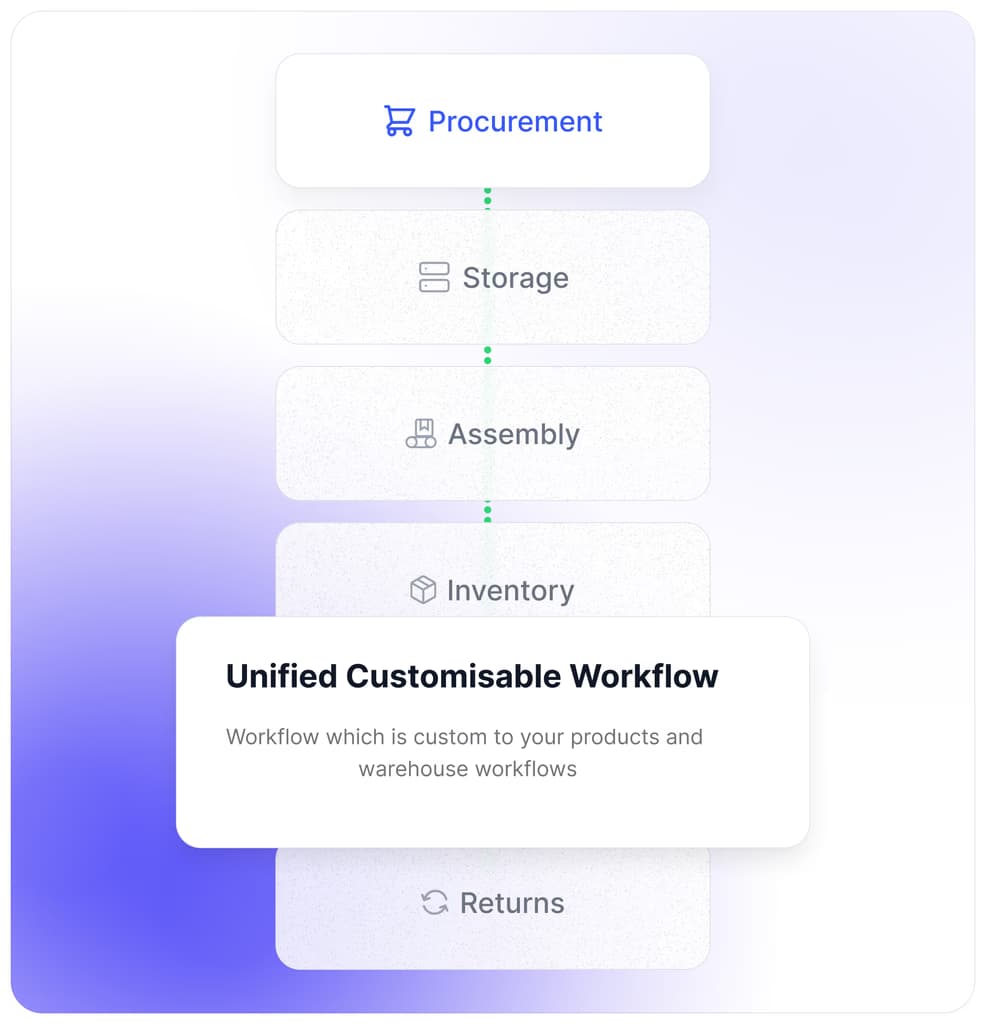
- FilFlo is the order-to-cash operations layer for FMCG and D2C brands — running channel POs from Blinkit, Zepto, distributors, and modern trade through a 14-state lifecycle from open to GRN entered.
- FilFlo's warehouse layer is FMCG-shaped: batch and expiry per rack, shelf-life buckets, FIFO allocation by inward date, QR-case dispatch scanning, and cycle counts with maker-checker approval.
- On top of the warehouse sit the order-management pieces a WMS doesn't carry: IRN e-invoicing, e-way bills, GRN mismatch reconciliation, fill-rate funnels, sales loss at PO rate, and procurement alerts.
- Some fashion brands selling B2B use Increff for warehouse optimisation and FilFlo for B2B order management — they operate at different layers.
Short Answer
Choose Increff when the main problem is warehouse execution for fashion workflows — size-curve planning, style-colour-size attributes, bin locations, and retail replenishment for apparel. Choose FilFlo when the problem is FMCG B2B distribution: ingesting quick-commerce POs, approving them with documented quantity cuts, picking FIFO against batches and racks, generating IRN e-invoices and e-way bills, entering GRNs, and measuring fill rate per channel.
Some brands can use both. In that setup, Increff optimises the fashion warehouse floor while FilFlo owns the B2B order lifecycle and the reports that buyers, finance teams, and sales operators need.
Layer 1 vs Layer 2: WMS and Order Management Are Different
The most useful way to compare the two is to separate warehouse management from order management. A warehouse management system controls what happens inside the facility; an order management system controls the buyer-facing workflow that surrounds the facility — the PO, the approval, the invoice, the truck, and the receiving record at the other end.
WMS layer (what Increff handles)
What happens inside the warehouse:
- • Bin and rack location management
- • Pick list generation for warehouse staff
- • Barcode scanning and pack verification
- • Inbound putaway workflows
- • Physical inventory counting
Order management layer (what FilFlo handles)
The B2B order journey end-to-end:
- • Ingest PO from Blinkit, Zepto, or a distributor
- • Approve line items with quantity-cut reasons
- • Generate FIFO picklist + dispatch scan
- • Create IRN e-invoice + e-way bill
- • Track in-transit → delivery → GRN reconciliation
The nuance is that FilFlo is not order management floating above someone else's inventory. It works alongside an existing WMS or 3PL — or runs picking, scanning and dispatch itself for brands that don't have one — with its own FMCG-grade warehouse layer of batches, racks, expiry dates, QR-coded cases, and a full movement ledger, because in B2B distribution the order workflow and the stock reality have to agree line by line, batch by batch.
What Increff Does Well
Increff's WMS is particularly strong in fashion and apparel. The fashion category has genuine complexity of its own: a single style might come in 5 sizes and 4 colours — 20 SKUs for one product. Increff's size-curve optimisation helps brands stock the right size ratio based on historical sell-through, avoiding the perennial problem of 200 units in size L while size M is sold out.
Increff core strengths
- Size-curve optimisation for fashion brands (S/M/L/XL ratio management)
- Style-colour-size attribute management across SKUs
- Warehouse bin and rack location management
- Retail store replenishment for apparel chains
- Strong presence in fashion marketplace fulfilment
What FilFlo Is Built For: The FMCG B2B Order Lifecycle
FilFlo is designed for FMCG and D2C brands — food and beverage, personal care, health, home goods — selling into quick commerce, regional distributors, and modern trade. The operating unit is the channel purchase order, and the platform runs it through a full lifecycle:
FilFlo's B2B order workflow
The happy path of a 14-state lifecycle — the branches include rejected, cancelled, cancelled via credit note, RTO, and GRN mismatch. Every order line tracks ordered → approved → fulfilled → GRN quantities, and every reduction requires a structured reason.
- Three tiers of PO ingestion: manual entry, dedicated CSV parsers for Blinkit / Zepto / Swiggy Instamart, and fully automated inbound POs (Blinkit webhook workflow, Hyperpure email ingestion)
- IRN e-invoice generation at invoicing — with invoice series per GSTIN profile, so multi-state brands invoice compliantly from every warehouse
- E-way bills auto-generated on dispatch for inter-state moves, with validity countdowns and NIC reconciliation
- GRN entry in unit items with mismatch reasons — short received, damage received, excess received, wrong product
- Fill Rate Funnel and Sales Loss valued at PO rate — per channel, per SKU, per stage
- Procurement POs to your own suppliers with vendor acknowledgment, inward against PO, and purchase returns with supplier debit notes
FilFlo's Warehouse Layer: Batch, Expiry, and Shelf-Life Buckets
Fashion inventory ages in seasons; FMCG inventory ages in days printed on the pack. FilFlo's inventory model is built around that fact. Every inward — whether from a supplier PO, a production run, or a CSV — records the batch, manufacturing date, and expiry date against a rack location. The Product Inventory screen gives three views of the same stock: By Rack, By Product, and By Age, the last one showing batch ageing with MFG and expiry columns that food brands live in.
On top of the raw dates, FilFlo classifies every batch into shelf-life buckets — 0–25%, 25–50%, 50–75%, and 75–100% of remaining shelf life — per SKU per warehouse. Quick commerce channels enforce minimum-remaining-shelf-life rules at receiving, so this bucket view is what tells a planner "push this batch to Blinkit this week, or it will only be sellable in general trade next month." Picklists reinforce the same discipline mechanically: allocations are FIFO by inward date, so the oldest stock leaves first, and an order line can split across batches with different MFG/EXP dates when a single batch cannot cover it.
Underneath everything sits the inventory ledger: every inward, allocation, outward, deallocation, and adjustment is a typed entry with the available balance after the movement and the person who performed it, holding the invariant that total = available + allocated at product, rack, and batch grain. Cycle counts run through a maker-checker Count Adjustment flow — physical quantity entered, variance auto-computed, a reason required (damage, theft, count error, expiry, other), then a second person approves or rejects with before/after snapshots. When an auditor or a channel dispute asks "where did these 40 units go," the answer is a filterable log, not a shrug.
Case-Unit Math and QR Dispatch Scanning
Two more mechanics matter disproportionately in FMCG B2B and are easy to miss on a feature checklist. The first is case-unit math. Quick commerce POs are placed in cases; GRNs come back in unit items. FilFlo stores a case size on every product and converts throughout — unit items = quantity × case size — so a 50-case PO of a 12-pack SKU reconciles cleanly against a 594-unit GRN, and the 6 missing units carry a reason instead of disappearing into rounding.
The second is physical verification at the dock. Cases in FilFlo carry QR codes and a status chain of available → allocated → picked → dispatched. At dispatch, each case is scanned — camera or manual code entry — and the system returns a per-scan verdict: valid, invalid case, wrong picklist, wrong rack, already scanned, or not allocated. The wrong case for the wrong order gets caught at the gate, not three weeks later as a GRN mismatch and a debit from the channel.
Selling FMCG or D2C into Quick Commerce?
Book a demo to see how FilFlo handles Blinkit and Zepto POs end-to-end — from CSV import to IRN e-invoice to GRN reconciliation.
Feature-by-Feature Comparison
| Feature | Increff | FilFlo |
|---|---|---|
| Primary focus | Fashion WMS & size optimisation | Order-to-cash operations for FMCG/D2C quick commerce |
| B2B order lifecycle (Open → GRN) | ❌ WMS layer only | ✅ Full 14-state lifecycle |
| Quick commerce POs (Blinkit, Zepto, Instamart) | ❌ | ✅ CSV parsers + automated inbound |
| IRN / GST e-invoice generation | ❌ | ✅ Built-in, per-GSTIN invoice series |
| E-way bill generation on dispatch | ❌ | ✅ Auto, with NIC reconciliation |
| GRN entry with mismatch reasons | ❌ | ✅ short / damage / excess / wrong product |
| Fill-rate funnel per channel | ❌ | ✅ Ordered → Approved → Fulfilled → GRN |
| Replenishment alerts (days of cover) | ❌ | ✅ Critical / Reorder Soon → bulk POs |
| Warehouse rack location management | ✅ Yes | ✅ Yes, with FIFO allocation by inward date |
| Picklist generation | ✅ Warehouse-level | ✅ Per order, batch-split, scan-verified |
| Fashion size-curve optimisation | ✅ Core feature | ❌ Not applicable |
| Style/colour/size attribute management | ✅ Core feature | ⚠️ Generic attributes |
| FMCG batch, expiry & shelf-life buckets | ⚠️ Limited | ✅ Per batch per rack, 4 shelf-life buckets |
| Cycle counts with maker-checker approval | ⚠️ Varies | ✅ Variance + reason + approval snapshots |
| Manufacturing (BOM → job orders) | ❌ | ✅ Light manufacturing built in |
| Best for | Fashion/apparel warehouse ops | FMCG/D2C B2B distribution |
Replenishment and Manufacturing: The Layers Behind the Warehouse
A WMS ends at the warehouse walls. FMCG operations do not — stock has to be bought or made before it can be picked. FilFlo carries both layers.
On the buying side, Procurement Alerts watch consumption per SKU and flag Critical (zero stock) and Reorder Soon items with days of cover left and a suggested order quantity. The rule is transparent: the safety floor is 2 × inward TAT × daily run-rate, a reorder triggers when on-hand plus in-transit stock falls below it, and the suggested quantity rounds up to the supplier's MOQ or case size. Ops multi-selects alerts and creates purchase orders in bulk; the PO tracks vendor acknowledgment, goods are inwarded against it with batch and expiry, and short or damaged supply flows into a purchase return that auto-generates a supplier debit note. Coffee brand Sleepy Owl runs this consumption-driven loop across more than a thousand materials — replenishment by days-left, not gut feel.
For brands that manufacture rather than just move goods, Material BOMs define what each finished good consumes, and Job Orders run production: the BOM explodes into per-unit material requirements, allocations split across raw-material batches, materials transfer from the storage room to the floor, and finished goods land in sellable inventory when the run completes — with leftovers returned to storage so counts stay honest. Anveshan, which manufactures ghee and cold-pressed oils at its own facility, runs this flow with hard QC gates: inbound material cannot be consumed by production until lab testing clears it.
When Both Make Sense
A fashion brand that also sells a food or lifestyle line into quick commerce might genuinely use both. Increff optimises the apparel warehouse — size runs, bin locations, marketplace fulfilment. FilFlo manages the B2B order channel for distributor and quick commerce POs, generating the IRN invoices and e-way bills and reconciling the GRNs.
But for most FMCG and D2C brands — food, beverages, personal care, health — Increff's fashion-specific strengths are not the constraint. The constraint is the channel PO workflow: SKU mapping, appointment compliance, state-wise GSTIN invoicing, GRN reconciliation, fill-rate defence. That is the problem FilFlo is built around.
How FilFlo Is Built for FMCG & D2C vs. Increff's Fashion Focus
The operational requirements for FMCG brands selling into quick commerce are different in kind, not just degree, from fashion distribution. FilFlo is built around the data model, compliance requirements, and KPIs of food, beverage, personal care, and home goods brands.
FMCG-specific mechanics in FilFlo
- Batch & expiry per rack — every ledger entry carries batch, MFG, and expiry; FIFO allocation by inward date moves old stock first, and expiry shows red as a batch nears its date.
- Shelf-life buckets — 0–25 / 25–50 / 50–75 / 75–100% of remaining shelf life per SKU per warehouse, the input for channel allocation decisions.
- Case-size conversion — POs in cases, GRNs in unit items; unit items = quantity × case size, applied consistently from approval to reconciliation.
- HSN and tax slab per product — 0 / 5 / 12 / 18 / 28%, plus the 40% slab for sweetened beverages, feeding IRN payloads automatically.
- Appointment & compliance gates — per-order channel checklists (appointment, ASN, shelf-life approval), appointment-date history with change reasons, and handling for vehicles returned from a DC.
Increff's fashion-specific features (not in FilFlo)
- ►Size-curve optimisation (S/M/L/XL ratio management)
- ►Style/Colour/Size attribute management
- ►Retail store replenishment for apparel chains
- ►Fashion marketplace-specific fulfilment workflows
- ►Garment-level barcoding (individual item vs. case)
Both lists are real capabilities — they just serve different categories. For an FMCG brand, the left column is the daily job; for an apparel brand, the right column is.
One System Across Blinkit, Zepto & Swiggy Instamart
FMCG brands on multiple quick commerce platforms face the same problem three times over: each platform issues POs in its own format, with its own SKU codes, and expects its own receiving discipline. FilFlo runs all of them through one workflow.
blinkit_sku_codezepto_sku_codeswiggy_sku_codeHyperpure POs arrive fully automated via email ingestion as well, and each PO's delivery location — a specific dark store or feeder warehouse — resolves through a Delivery Location → B2B Customer mapping to the correct state GSTIN entity for invoicing.
The result: an FMCG brand processes POs from every quick commerce channel in one system, with one IRN invoicing and GRN reconciliation workflow, and one fill-rate funnel across channels — while the warehouse layer underneath keeps batches, expiry dates, and racks honest. That combination — order management fused with FMCG-grade inventory — is the practical difference between FilFlo and a fashion-first WMS.
Frequently Asked Questions
Is Increff suitable for FMCG brands?+
Increff was designed primarily around fashion and lifestyle — its standout features are size-curve optimisation, style/colour/size attribute management, and retail store replenishment for apparel. FMCG operations turn on different mechanics: batch and expiry tracking, shelf-life buckets, FIFO allocation by inward date, case-to-unit conversion, IRN e-invoicing on per-GSTIN series, and GRN reconciliation with quick commerce buyers. FilFlo is built around exactly that set.
What makes FilFlo specific to Indian B2B distribution?+
FilFlo is built around the operational reality of Indian D2C and FMCG brands: dedicated CSV parsers for Blinkit, Zepto, and Swiggy Instamart PO files plus automated inbound POs (Blinkit webhook workflow, Hyperpure email ingestion); IRN e-invoice generation integrated into the invoicing step with invoice series per GSTIN profile; e-way bills auto-generated on dispatch; GRN entry with structured mismatch reasons; and fill-rate funnels per channel — the KPI quick commerce platforms use to rank you.
Does Increff handle B2B orders from quick commerce?+
Increff is WMS-first — its depth is in what happens inside the warehouse. It is not built around the B2B purchase order lifecycle that quick commerce demands: PO ingestion with channel SKU mapping, approval with quantity-cut reasons, IRN e-invoicing, e-way bills, DC appointments, and GRN reconciliation. Those are order-management concerns, and they are FilFlo's core.
Can a fashion brand use FilFlo?+
Yes, if the brand has B2B distribution — selling to distributors, modern trade, or quick commerce. FilFlo manages the B2B order lifecycle regardless of product category. For fashion-specific warehouse optimisation (size curves, style/colour/size planning), a fashion WMS like Increff may still be appropriate alongside FilFlo — they operate at different layers.
What reports does FilFlo provide?+
The Dashboard carries a Fill Rate Funnel (Ordered → Approved → Fulfilled → GRN Received with per-stage loss attribution), a Turnaround Overview with average, median, and P90 TATs for every lifecycle stage, and a Sales Loss widget of top short-shipped SKUs by lost value. Standing reports include Sales Loss, Sales Flash, GST Summary (monthly and HSN-wise), Party Ledger, Pending Invoices, In-Transit Ageing, GRN KPI, daily fill rate per channel, and Warehouse Insight with Days On Hand per warehouse.
How does FilFlo track expiry and shelf life?+
Every inward records batch, manufacturing date, and expiry date against a rack location. The Product Inventory screen has a By Age tab showing batch ageing, and each batch is classified into shelf-life buckets — 0–25%, 25–50%, 50–75%, and 75–100% of remaining shelf life — per SKU per warehouse. That is the input for decisions like pushing an ageing batch to quick commerce before it falls outside a channel's acceptable expiry window. Picklists allocate FIFO by inward date so old stock moves first.
How does FilFlo prevent wrong dispatches from the warehouse?+
Physical cases carry QR codes and move through a status chain: available → allocated → picked → dispatched. At dispatch, each case is scanned (camera or manual code entry) and FilFlo returns a per-scan verdict — valid, invalid case, wrong picklist, wrong rack, already scanned, or not allocated. A case allocated to a different order physically cannot be waved through, and every scan writes to the inventory ledger.
Does FilFlo handle procurement and manufacturing too?+
Yes. Procurement Alerts flag SKUs as Critical or Reorder Soon based on a consumption rule — safety floor = 2 × inward TAT × daily run-rate — showing days of cover left and a suggested quantity rounded to MOQ or case size, with bulk PO creation, vendor acknowledgment tracking, and purchase returns that auto-generate supplier debit notes. For brands that manufacture, Material BOMs and Job Orders consume raw-material inventory batch by batch and create finished-goods stock, with leftovers returned to storage so counts stay honest.
FMCG or D2C Brand Selling Into Blinkit or Zepto?
FilFlo is purpose-built for your B2B distribution workflow — from quick commerce PO ingestion to IRN e-invoice to GRN reconciliation and fill-rate reporting.