
Top 10 Order-to-Cash Solutions for Indian Brands (2026)
"Order to cash" is one of those categories where every vendor claims the whole thing and each one actually owns a slice. Some tools manage the order and the truck; some generate the compliant invoice; some chase the payment. This guide compares ten O2C solutions relevant to Indian brands — operational platforms, ERPs, commerce OMS players, and AR automation suites — and is explicit about which slice each one covers, so you buy for the problem you actually have.
⚡ Key Takeaways
- Order-to-cash splits into three slices: operational O2C (order intake → fulfilment → GRN → credit notes), ERP order-to-cash (one system of record end to end), and AR automation (collections, deductions, cash application).
- For consumer brands selling into quick-commerce and modern trade, the money leaks in the operational slice — short-shipped POs, GRN mismatches, and unreconciled credit notes — before AR software ever sees the invoice.
- India adds compliance steps most global O2C tools treat as afterthoughts: per-GSTIN IRN e-invoicing, e-way bills, and state-wise invoice series. Check whether these are native or bolted on.
- Enterprise AR suites like HighRadius and Esker are excellent at cash application and collections, but they assume clean invoices arrive from somewhere else — they don't run your warehouse or your channel POs.
- Most brands end up pairing one operational O2C platform with their existing accounting system (often Tally or Zoho) rather than buying a monolith.
What "Order to Cash" Actually Covers
The textbook O2C cycle runs: order capture → credit check → fulfilment → invoicing → delivery → receivables → collections → cash application. For an Indian consumer brand selling into Blinkit, Zepto, Swiggy Instamart, modern trade, and distributors, the cycle looks more like: channel PO lands (in the channel's own format, with the channel's own SKU codes) → approve against stock → pick → generate an IRN e-invoice on the right GSTIN's series → e-way bill → dispatch against an appointment → delivery → the buyer's GRN → reconcile what was received against what was invoiced → credit notes for the gap → and only then, payment.
No single product on this list does all of that for every business model. So instead of pretending they're interchangeable, each entry below states which slice of order-to-cash the tool owns, who it fits, and where it stops.
The 10 Solutions at a Glance
| Solution | Slice of O2C it owns | Best fit |
|---|---|---|
| 1. FilFlo | Operational O2C: channel PO → picking → IRN invoice → e-way bill → GRN → credit notes | FMCG / D2C brands selling into quick-commerce, modern trade, and distributors |
| 2. HighRadius | AR automation: collections, deductions, cash application | Enterprises with large receivables books and dedicated AR teams |
| 3. Esker | O2C suite: order capture + invoice delivery + collections + cash application | Mid-size to large companies wanting one AR-centric O2C layer over their ERP |
| 4. SAP S/4HANA | Full ERP order-to-cash: SD, logistics, billing, FI, credit management | Large enterprises already committed to the SAP ecosystem |
| 5. Oracle NetSuite | Cloud ERP order-to-cash with India localization SuiteApps | Mid-market companies consolidating finance, inventory, and orders in one ERP |
| 6. Unicommerce | E-commerce order + warehouse management across marketplaces | Marketplace and D2C sellers with high B2C order volumes |
| 7. Increff | OMS + WMS for fashion and lifestyle, piece-level accuracy | Fashion, footwear, and lifestyle brands running omnichannel fulfilment |
| 8. EasyEcom | Multichannel inventory and order operations with accounting integrations | D2C sellers aggregating Shopify + marketplace orders into one panel |
| 9. Zoho Books + Inventory | SMB order-to-cash: sales order → invoice (IRN) → payment, with GST filings | Small and mid-size businesses that want O2C inside their accounting suite |
| 10. Bizom | General-trade distribution O2C: SFA + DMS, primary orders → distributor billing | FMCG brands running field sales and distributor networks |
1. FilFlo — Operational Order-to-Cash for FMCG and D2C Brands
Disclosure: FilFlo is our product, and this is our home category — so read this entry as a maker's pitch, checked against a fair "who it's not for" below. The other nine entries are written as straight descriptions.
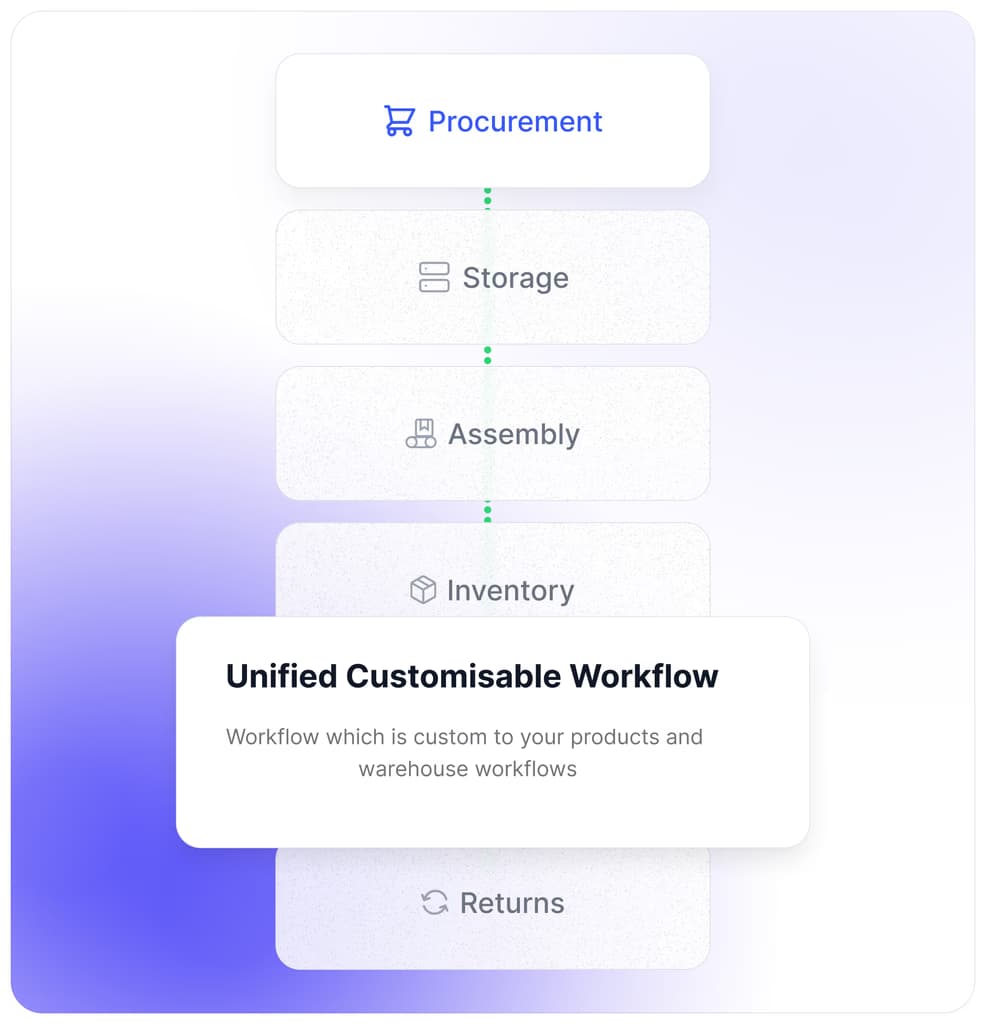
FilFlo is the order-to-cash operations layer for FMCG brands selling through quick commerce, modern trade, and distributor networks. Its slice of order-to-cash is the operational one — everything between a channel PO landing and the payment becoming collectible — modelled as a 14-state order lifecycle where every quantity change carries a reason. Orders arrive three ways: manual entry, channel CSV parsers for Blinkit, Zepto, and Swiggy Instamart PO files, or fully automated inbound POs (Blinkit via webhook, Hyperpure via email ingestion) — plus outbound ASN submission to Zepto. From there the flow runs approval (with reasons for every quantity cut) → FIFO picking → automatic IRN e-invoicing on the correct GSTIN's invoice series → e-way bill on dispatch → delivery → GRN entry with typed mismatch reasons → credit notes (RTV, RTO, Partially Delivered, Undelivered — each carrying its own IRN) → and a returns pipeline that triages RTO crates into sellable, non-sellable, or discard.
The analytics follow the same per-stage discipline. A Fill-Rate Funnel tracks units from Ordered → Approved → Fulfilled → GRN Received with loss attribution at each stage, so "fill rate dropped" becomes "short supply at approval" or "damage at GRN." A Sales Loss report values every short-shipped unit at PO rate — the rupee number for what stockouts cost. A PO Tracker gives ops one workspace for every platform PO, with five computed TATs across the PO's life (PO received, SO punching, scheduling, delivery/appointment, closure). Brands like Anveshan, Sleepy Owl Coffee, and Jimmy's Cocktails run this loop on FilFlo daily. It plugs into existing 3PL WMS, ERP, and accounting systems (including a clean Tally handoff) rather than replacing them.
Who it's not for: FilFlo does not do collections outreach, dunning, deduction dispute management, or AI cash application against bank feeds. If you're an enterprise whose O2C pain is a large receivables book — matching thousands of remittances to invoices, prioritising collector worklists — look at HighRadius or Esker. FilFlo owns the operational order-to-cash from PO to GRN to credit note; it hands clean, reconciled financial documents to your accounting system, which is where receivables live.
2. HighRadius — Enterprise AR and Cash Application
HighRadius is the biggest name in AR-side order-to-cash automation, and it has a strong India connection — a large part of the company is built out of Hyderabad, even as it serves Fortune 1000 clients globally. Its O2C suite covers credit management, e-invoice presentment and payment, collections worklists, deductions management, and AI-driven cash application that matches incoming payments to open invoices. It has been named a Leader in Gartner's Magic Quadrant for invoice-to-cash applications multiple years running.
The slice it owns is everything after the invoice exists: getting it delivered, getting it paid, applying the cash, and resolving what doesn't match. For a company with hundreds of crores in receivables, a dedicated collections team, and payments arriving via NEFT, cheques, and deductions-laden remittances, this is exactly the machinery that shrinks DSO.
Limitations for a growing Indian brand: HighRadius assumes an ERP is already producing clean invoices and doesn't touch the operational half — channel PO ingestion, picking, GRN reconciliation, or India-specific mechanics like IRN generation and e-way bills. It is enterprise software with enterprise implementation cycles; a ₹50–200 crore consumer brand whose cash leaks through short-shipped POs rather than slow collections will find it solves the wrong problem first.
3. Esker — The AR-Centric O2C Suite
Esker, a French vendor now part of the Bridgepoint/GA ecosystem, positions itself as a single cloud platform spanning source-to-pay and order-to-cash. On the O2C side it offers order capture (including AI reading of emailed and PDF purchase orders), credit management, invoice delivery with e-invoicing compliance in 60+ countries, collections management, cash application, and deductions handling. Its cash application claims 90%+ touchless allocation, and it appears consistently in IDC and Hackett assessments of AR automation vendors.
Esker's distinctive strength versus pure AR tools is order management: its AI order-entry module automates keying customer POs into the ERP, which matters for B2B companies drowning in emailed orders. Combined with the AR modules, that makes Esker the closest thing on this list to a true end-to-end O2C layer that sits on top of an existing ERP. Its modular, à-la-carte structure means you can start with one process.
Limitations: like HighRadius, Esker doesn't run warehouses, allocate stock, or generate Indian IRNs and e-way bills as a native workflow — it automates documents and money, not goods movement. Its centre of gravity is Europe and North America; Indian mid-market adoption is thinner, and channel-specific quick-commerce mechanics (SKU code mapping, appointment gates, GRN mismatch reasons) are outside its model.
4. SAP S/4HANA — Enterprise ERP Order-to-Cash
For large enterprises, order-to-cash is often not a product you buy but a process you configure inside the ERP — and SAP S/4HANA is the reference implementation. Its O2C process runs across Sales & Distribution (order creation, pricing, credit checks), Logistics Execution (delivery, goods issue), billing, Financial Accounting, and FSCM for receivables and collections — all on one data model with real-time reporting. India-specific GST requirements, including e-invoicing, are handled through SAP's India localization.
The advantage is integrity: one system of record where the sales order, the stock movement, the invoice, and the ledger entry can never disagree, with credit management enforced at order entry. For a large FMCG enterprise with SAP already deployed across manufacturing and finance, extending O2C inside S/4HANA is usually the default answer, and a defensible one.
Limitations: cost, implementation timelines measured in quarters or years, and rigidity at the edges. Channel-specific quick-commerce workflows — per-dark-store SKU codes, appointment rebooking, GRN-based fill-rate funnels — typically end up as custom development or Excel side-cars around SAP. For brands below enterprise scale, S/4HANA is not a realistic first O2C system.
5. Oracle NetSuite — Cloud ERP O2C for the Mid-Market
NetSuite is the cloud ERP many scaling companies graduate into, and its order-to-cash flow — sales order → fulfilment → invoice → receivable → payment — comes as standard, tied into inventory and financials. For India, the India Localization SuiteApp and the SuiteTax engine handle GST rates (CGST/SGST/IGST), e-invoicing with IRN and QR code capture from the IRP, e-way bills, and TDS/TCS, usually implemented through experienced local partners.
NetSuite's pitch is consolidation: one system replacing the accounting package, the inventory spreadsheet, and the order tracker as a company crosses the complexity threshold. For a brand with multiple entities, subsidiaries, or international operations, its multi-entity financials are genuinely strong, and O2C benefits from living next to the general ledger.
Limitations: India compliance depends on localization SuiteApps and partner quality — it works, but it is configured rather than native, and edge cases surface during implementation. Like SAP, NetSuite has no concept of a Blinkit PO file, a channel fill-rate penalty, or GRN mismatch reasons; brands selling into quick-commerce typically still need an operational layer in front of it. Licensing and implementation costs put it above the reach of early-stage brands.
See the Operational O2C Loop Live
Book a 30-minute demo and watch a Blinkit PO travel from CSV import to IRN e-invoice, e-way bill, GRN reconciliation, and credit note — the slice of order-to-cash where consumer brands actually lose money.
6. Unicommerce — E-commerce OMS at Marketplace Scale
Unicommerce is one of India's largest e-commerce enablement platforms, publicly listed, with an order management and warehouse management stack used by thousands of sellers and brands. Its slice of O2C is the B2C order pipeline: 140+ marketplace and cart integrations, real-time inventory sync across channels, bulk order processing, FIFO/FEFO picking, courier allocation across a wide pincode network, NDR handling, and returns management, plus a post-purchase layer (UniShip) for branded tracking.
If your order-to-cash problem is thousands of B2C parcels a day across Amazon, Flipkart, Myntra, and your own Shopify store — where "cash" means marketplace settlements and COD remittances — Unicommerce is a proven, scale-tested answer, and its warehouse tooling is deep for that shape of operation.
Limitations: the B2B channel O2C loop is not its centre of gravity. Quick-commerce and modern-trade mechanics — channel PO approval with quantity-cut reasons, appointment-gated dispatch, buyer-side GRN reconciliation, typed credit notes with their own IRNs — sit outside the standard B2C pipeline. Receivables, collections, and cash application are not what it does; settlements reconciliation is a different problem than a distributor party ledger.
7. Increff — OMS and WMS for Fashion and Lifestyle
Increff, a Bengaluru company serving 700+ retail brands, pairs merchandising and inventory-optimization software with an execution stack: an e-commerce WMS, a B2B/wholesale WMS, an OMS, and a quick-commerce module. Its hallmark is piece-level accuracy — each unit barcoded and tracked — which is why fashion, footwear, and lifestyle brands (PUMA India and AJIO are public references) use it to run high-SKU-count omnichannel fulfilment with strong inventory accuracy.
Within order-to-cash, Increff owns order orchestration and warehouse execution: exposing one pool of inventory to many channels, routing orders to the right node, and shipping accurately. For apparel-shaped inventory — thousands of style-size combinations, high returns — its model fits noticeably better than generic tools.
Limitations: it is fulfilment software, not a finance workflow. Invoicing compliance, credit notes, receivables, and collections live elsewhere. For FMCG brands, the fit is weaker: batch/expiry-driven allocation, shelf-life windows per channel, GRN shortage reasons, and fill-rate penalty management are quick-commerce FMCG mechanics rather than fashion mechanics, and FilFlo, for instance, is built around exactly those.
8. EasyEcom — Multichannel Inventory and Order Operations
EasyEcom is a Bengaluru-based inventory and order management platform with 220+ integrations across marketplaces, carts, couriers, accounting tools, and ERPs — Amazon, Flipkart, Shopify, Meesho, Tally, and SAP among them. It gives D2C sellers a single panel where multichannel inventory stays in sync, orders process automatically, and stock allocation across channels stops being a spreadsheet job. Its accounting integrations push order and settlement data toward the books, which is a practical piece of O2C plumbing many OMS tools skip.
For a growing D2C brand doing most of its volume on Shopify plus marketplaces, EasyEcom is one of the most accessible ways to get inventory truth and order automation without ERP-grade complexity. It also plays well as middleware: FilFlo itself ingests B2C orders aggregated via EasyEcom for brands that run B2B operations on FilFlo and B2C through EasyEcom.
Limitations: like Unicommerce, its core is B2C. The B2B order-to-cash loop — channel PO files, per-GSTIN invoice series, e-way bills, GRN reconciliation against buyer records, distributor rate cards and party ledgers — is not the product's spine. And it stops well short of receivables management: no collections, dunning, or cash application.
9. Zoho Books + Zoho Inventory — SMB Order-to-Cash Inside the Accounting Suite
For small and mid-size Indian businesses, the most economical O2C stack is often Zoho's: Zoho Inventory for sales orders, stock, and fulfilment, integrated with Zoho Books for invoicing, receivables, and GST compliance. The India story is genuinely strong — Zoho is a recognised GST Suvidha Provider, so Books uploads invoices directly to the IRP for IRN generation without a third-party GSP, computes CGST/SGST/IGST automatically, and flows e-invoice data into GSTR-1. The loop from sales order → invoice → payment reminder → payment recorded → GST return is complete and cheap.
As the accounting-anchored option on this list, Zoho covers a wider financial slice than the OMS players: receivables ageing, automated payment reminders, and customer portals are in the box. For a services business or a simple product business selling B2B on payment terms, this may be all the order-to-cash software you ever need.
Limitations: it is generic by design. Channel PO parsing, appointment and ASN gates, FIFO rack-level picking, GRN mismatch reasons, fill-rate funnels, RTO crate triage — the operational texture of selling into quick-commerce and modern trade — is absent. Brands often keep Zoho Books (or Tally) as the ledger and put an operational O2C platform in front of it, the same division of labour FilFlo runs with Tally.
10. Bizom — Order-to-Cash for General Trade Distribution
Bizom (by Mobisy) is a retail intelligence platform used by hundreds of FMCG brands to digitise field sales and distribution. Its O2C relevance is the general-trade slice, which none of the other tools on this list touch: sales force automation captures retailer orders in the field, the distributor management system handles primary orders, GRNs at the distributor, distributor ledgers, retailer billing, returns, and claims (price changes, damages, promotions). That is a genuine order-to-cash loop — just one that runs through a distributor network rather than a warehouse-to-dark-store lane.
For an FMCG brand whose volume is weighted toward kirana distribution — with hundreds of distributors and a field force — Bizom-style visibility into primary and secondary sales is the difference between knowing your sell-through and guessing it.
Limitations: Bizom orchestrates the distribution network; it does not run your warehouse operations or your organised-channel O2C. Quick-commerce PO ingestion, IRN e-invoicing workflows, e-way bills, picklists, and GRN reconciliation against Blinkit or a modern-trade DC are outside its scope. Brands strong in both GT and q-commerce sometimes run a DMS for the former and an operational platform like FilFlo for the latter, meeting in the accounting system.
How to Choose: Match the Tool to Where Your Cash Actually Leaks
The honest way to shortlist O2C software is to find the step in your own cycle where money disappears or stalls, and buy for that step first.
POs arrive in ten formats and someone re-keys them; orders expire unfulfilled; approvals stall. → Operational O2C (FilFlo for B2B channel brands; Unicommerce/EasyEcom for B2C volume; Esker for emailed enterprise POs).
IRN e-invoicing, e-way bills, and state-wise invoice series eat ops time or create audit risk. → Native India compliance: FilFlo or Zoho Books, or ERP localization if you're already on SAP/NetSuite.
You get paid short against invoices and nobody can say why — short received, damage, or wrong product. → A platform that carries orders through GRN entry and typed credit notes (FilFlo; Bizom on the distributor side).
Invoices are clean but cash arrives late; collectors work from spreadsheets; remittances don't match invoices. → AR automation (HighRadius, Esker) or ERP credit/collections modules.
You're consolidating finance, inventory, and orders into one system of record at scale. → ERP order-to-cash (NetSuite for mid-market, S/4HANA for enterprise) — and expect to keep an operational layer for channel-specific work.
One pattern worth naming: for consumer brands selling into quick-commerce and modern trade, the leak is almost never collections first. It is the operational gap between what the channel ordered, what you shipped, and what the GRN says arrived — because every unit lost in that gap is revenue that never becomes a receivable at all. Fix the PO-to-GRN loop before buying software to chase invoices faster.
Frequently Asked Questions
What is order-to-cash (O2C) software?
Order-to-cash software automates the cycle between receiving a customer order and collecting the money for it. Depending on the tool, that can mean order capture and fulfilment (order management), invoicing and tax compliance (in India: IRN e-invoicing and e-way bills), delivery confirmation and GRN reconciliation, credit notes and deductions, and finally accounts receivable — collections, payment matching, and cash application. No single tool covers every step for every business type, which is why this list spans operational platforms, ERPs, and AR automation suites.
Which order-to-cash solution is best for FMCG and D2C brands selling on Blinkit, Zepto, and Swiggy Instamart?
For the operational side of O2C — ingesting channel POs, approving and picking, generating per-GSTIN IRN e-invoices and e-way bills, entering GRNs, and reconciling shortages into credit notes — a purpose-built platform like FilFlo fits best, because generic OMS and ERP tools don't model quick-commerce mechanics like channel SKU codes, appointment gates, fill-rate funnels, or GRN mismatch reasons. If your pain is instead collections and cash application on large receivables books, an AR automation suite like HighRadius or Esker is the better fit.
What is the difference between order management software and AR automation software?
Order management software (Unicommerce, Increff, EasyEcom, Vinculum, and for B2B channel operations, FilFlo) owns the physical half of order-to-cash: order intake, inventory allocation, picking, dispatch, and delivery. AR automation software (HighRadius, Esker) owns the financial back half: invoice delivery, collections outreach, deduction management, and matching incoming payments to invoices. ERPs like SAP S/4HANA and NetSuite try to cover both inside one system of record. Most Indian brands end up combining one operational tool with their accounting system rather than buying everything from one vendor.
Why does GRN reconciliation matter in the Indian order-to-cash cycle?
In B2B channels like quick-commerce and modern trade, you get paid against what the buyer's Goods Received Note says arrived — not against what you invoiced. If the dark store or DC records 92 cases against an invoice of 100, the 8-case gap must be traced to a reason (short received, damage, wrong product) and settled with a credit note, or it becomes a permanent deduction dispute. Tools that stop at dispatch leave this gap unmanaged; O2C platforms that carry the order through GRN entry and typed credit notes close the loop between operations and receivables.
Do these tools handle GST e-invoicing (IRN) and e-way bills?
It varies, and it's worth checking carefully. India-built platforms like FilFlo and Zoho Books generate IRNs and e-way bills natively as part of the workflow. Global ERPs like SAP S/4HANA and NetSuite handle it through India localization packs or partner SuiteApps that connect to the IRP. AR automation suites like HighRadius and Esker focus on invoice delivery and collections rather than IRN generation, and typically sit on top of whatever system creates the compliant invoice. If e-invoicing compliance is your immediate pain, prioritise tools where IRN generation is native, not bolted on.
Selling Into Quick-Commerce or Modern Trade?
See how FilFlo runs the operational order-to-cash loop — channel PO to IRN invoice, e-way bill, GRN reconciliation, and credit note — while your accounting system stays exactly as it is.