
FilFlo and the Future of Inventory Management: Why This New Tech Could Revolutionize the Industry
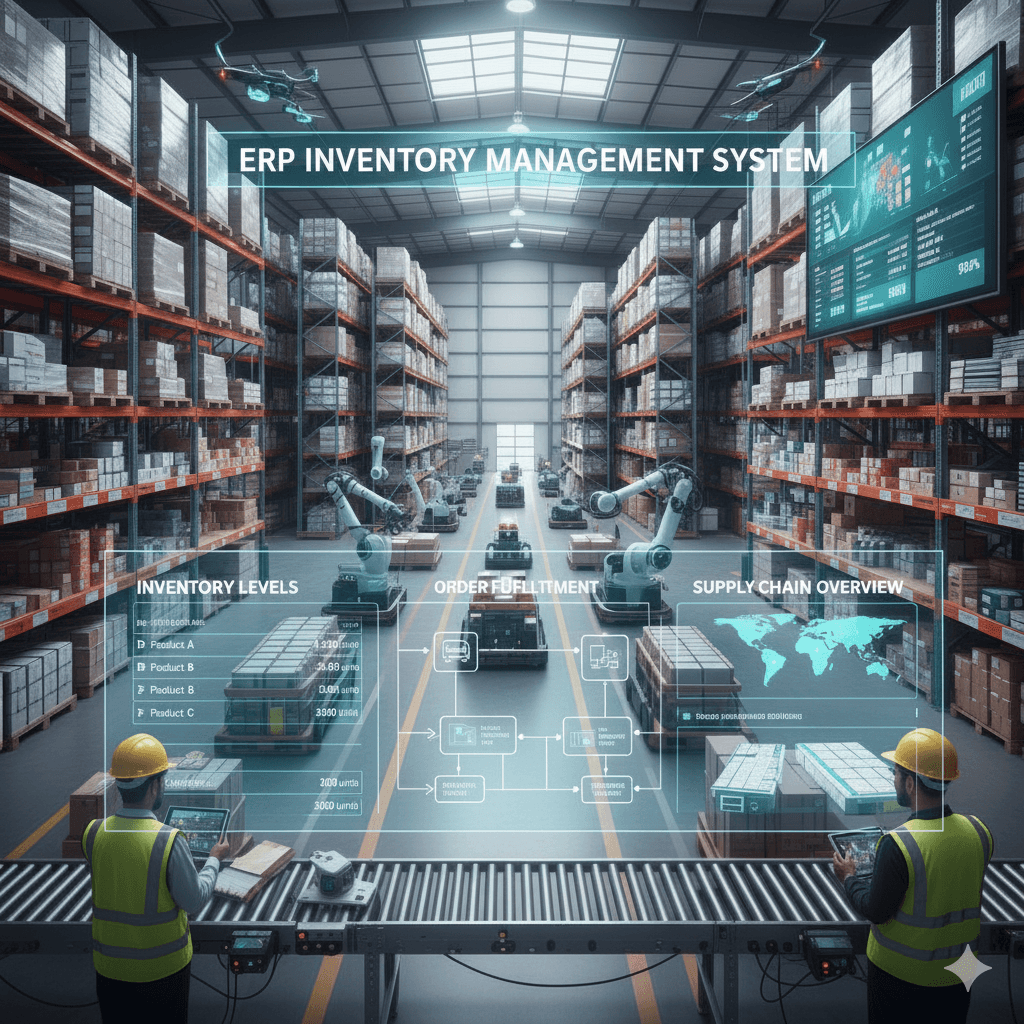
Inventory management is becoming less about a warehouse ledger and more about a live operating layer across quick commerce, modern trade, distributors, procurement, compliance, and fulfilment. FilFlo — the order-to-cash operations layer for FMCG brands selling through quick commerce — is built for that shift, and this article separates, honestly, what the platform does today from where it is heading.
Short Answer
The future of inventory management is an operating system that sees demand, supply, compliance, warehouse movement, and buyer commitments together. For an Indian D2C or FMCG brand, that means one workflow that understands a Blinkit PO and a distributor order, a GST e-invoice and an e-way bill, a batch expiry date and a rack location, a supplier GRN and a channel GRN.
FilFlo's bet is that inventory tools should not merely record stock after the fact. They should carry the work: track every order through a 14-state lifecycle, demand a reason for every quantity that changes, reconcile what the buyer received against what you shipped, and tell the ops team what to do next. That base exists today. What gets built on top of it — described later in this article, and clearly labeled as direction — is where the industry-changing part begins.
The typical stack at a growing brand is a warehouse tool that knows racks but not orders, an accounting package that knows invoices but not stock, spreadsheets that know whatever was last pasted into them, and WhatsApp threads holding it all together. Each tool is individually defensible. Collectively they guarantee that the answer to "can we fill this PO by Thursday?" requires three people and forty minutes. Somewhere around fifty purchase orders a day, that arrangement stops bending and breaks.
This article explains why a unified inventory operating layer is more useful than another disconnected tool in the stack — first through what FilFlo runs in production today, then through where that foundation points.
One Operating Layer Instead of Seven Tools
Most brands we meet are running some version of this stack:
- • Tally (or another package) for accounting
- • The 3PL's WMS for warehouse stock
- • Channel portals for POs and appointments
- • Spreadsheets for demand planning and PO trackers
- • A GST portal or e-invoicing tool for IRNs and e-way bills
- • Marketplace panels checked one by one
- • WhatsApp for everything the other tools can't say to each other
FilFlo works alongside an existing WMS or 3PL — or runs picking, scanning and dispatch itself for brands that don't have one — and replaces the coordination layer of that stack, not the accounting system: channel PO ingestion, approval, picking, invoicing, dispatch, delivery, GRN reconciliation, returns, procurement, and replenishment, in one system of record that one ops team can run.
Why this matters
When order flow, stock positions, invoices, and GRNs live in one system, questions that used to require a meeting become lookups. Which SKUs are short against open POs? What did Blinkit actually receive versus what we invoiced last month? Which batches age out of the quick-commerce acceptance window in three weeks? Each of these is a screen, not a project.
In an industry where the expensive mistakes are operational — a missed DC appointment, a truck dispatched without a valid e-way bill, a fill-rate penalty, a batch discovered expired — unification is not a software preference. It is how those mistakes get caught while they are still cheap.
The Base That Exists Today: A Lifecycle With No Blind Spots
Visions are cheap; state machines are not. The credibility of any "future of inventory" claim rests on what already runs in production, so here is FilFlo's current base, concretely.
A 14-state order lifecycle
Every B2B order moves through a defined lifecycle — open → approved → picked → invoiced → in transit → delivered → GRN entered — with explicit branches for rejected, cancelled, RTO, and GRN mismatch. Fourteen states in all, which sounds bureaucratic until you realise each state is a question the old stack could not answer: is this order stuck at finance approval, or waiting on a picklist, or sitting invoiced but undispatched? The Dashboard's Turnaround Overview times every stage transition (average, median, and P90), so "orders are slow" becomes "Invoiced → Dispatched has a P90 of three days and that is where the week goes."
A reason for every lost unit
Every order line carries four quantities — ordered, approved, fulfilled, and GRN'd — and any reduction between them requires a typed reason: short supply, out of stock, or quality issue at approval and fulfilment; short received, damage received, excess received, or wrong product at GRN. This is the discipline that makes the analytics honest. The Fill Rate Funnel (Ordered → Approved → Fulfilled → GRN Received) attributes loss to named causes per stage, and the Sales Loss report values short-shipped units at PO rate — the rupee number for what stockouts cost.
GRN reconciliation that closes the loop
Most systems consider an order done when it ships. FilFlo considers it done when the channel's Goods Received Note is entered and reconciled — quantities in unit items, discrepancies captured with reasons, the order landing in grn_entered or grn_mismatch. The delta between what you invoiced and what the buyer acknowledged is where fill-rate penalties, disputed payments, and quiet revenue leakage live; making it a first-class workflow state means someone owns it.
Batch, expiry, and QR-coded physical truth
Inventory is tracked at batch and rack grain with MFG and EXP dates, viewable By Rack, By Product, or By Age, with remaining shelf life bucketed per warehouse. An order line can split across batches with different expiry dates; picklists allocate FIFO by inward date. Below the batch sits the case: physical cases carry QR codes and a status chain — available → allocated → picked → dispatched — verified by scanning at pick and at dispatch, where each scan returns a verdict (valid, wrong picklist, wrong rack, already scanned). The system's stock number and the warehouse's physical reality are kept honest against each other, with cycle counts and maker-checker adjustments covering the drift.
Multi-GSTIN compliance built into the flow
A brand shipping from warehouses in three states runs three invoicing profiles, each with its own GSTIN and invoice series per financial year. Invoicing an order generates the GST e-invoice automatically — IRN, acknowledgement number, signed QR code — from the correct profile for the dispatching warehouse; e-way bills generate at dispatch for inter-state moves. Credit notes (typed RTV, RTO, partially delivered, undelivered) carry their own IRNs and can trigger physical return inwards when material is actually coming back. Compliance stops being a parallel workstream and becomes a property of the order flow.
This base runs in production today for brands like Anveshan, Sleepy Owl Coffee, and Jimmy's Cocktails — a manufacturer with lab QC gates and QR-coded pallets, a procurement-heavy coffee brand running replenishment from consumption alerts, and a beverage brand invoicing every retailer-state pair from its own GST series. Three very different operating shapes on the same lifecycle.
Plugging Into the Stack You Already Run
The future of inventory management is not rip-and-replace, because nobody rips out a working 3PL contract or an accountant's Tally setup mid-season. FilFlo's integration posture is deliberately honest about this:
Order ingestion, three tiers:
- • Fully automated: Blinkit webhook workflow (FilFlo-operated middleware), Zepto inbound PO ingestion, and Hyperpure email parsing — orders arrive stamped "Automated via FilFlo"
- • Channel CSV parsers: Blinkit, Zepto, Swiggy Instamart PO files with all-or-nothing validation
- • D2C and marketplace orders: aggregated via EasyEcom on the shared cloud (Shopify, Amazon, JioMart, Myntra and others flow in through it), or through storefront and marketplace connections FilFlo implements per brand on dedicated instances
Systems of record stay put:
- • A webhook hub pushes order events to 3PL WMS platforms and ingests their status webhooks back, with retries and dead-letter handling
- • Invoices and credit notes export in Tally-mapped file formats for the accountant to import; a Tally Party Name field keeps ledgers reconcilable
- • FilFlo pushes approved sales orders into Microsoft Dynamics 365 F&O over its native API (OData) and reads invoices back — bidirectional and live today
- • A scoped external API lets 3PLs confirm delivery and enter GRNs without dashboard access
The same honesty applies to people: brand staff and 3PL staff work in one workspace under role-scoped permissions, so the warehouse partner sees picklists and inwards while the finance user sees invoicing approvals. An operating layer that respects the existing stack is one that actually gets adopted.
Replenishment and Planning: Deterministic Today, By Design
Here is where we depart from the category's usual script. Most inventory platforms at this point promise AI demand prediction. FilFlo's shipped planning layer is deliberately deterministic, and we think that is currently the right call.
What runs today:
- • Procurement Alerts: consumption-based days-left per SKU with severity (Critical / Reorder Soon) and editable suggested quantities
- • Safety-floor math: 2 × inward TAT × daily run-rate, counting in-transit stock, rounded to MOQ and case size
- • Bulk PO creation from selected alerts — human approves, system executes
- • Retail Forecast workbench: last-three-month average of primary shipments per distribution point, reconciled against imported secondary sales and opening stock
Why deterministic first:
- • Every suggested quantity is explainable — a buyer can see the run-rate and TAT behind it
- • Trust is the bottleneck for autonomy, and auditable rules earn it faster than opaque models
- • Seasonal judgement (Diwali builds, monsoon lead times) stays with the planner, applied as run-rate and TAT adjustments
Smarter forecasting on top of this base is a direction we are actively heading — but it will arrive as an assist to the same auditable workflow, not as a black box that replaces it. Which brings us to the future properly.
Where This Is Heading — Direction, Not Shipped Features
Everything above is present tense. This section is future tense, and we mark it clearly as such: none of the following is a current capability, and anyone evaluating FilFlo should evaluate it on the shipped base. But the base determines what can honestly be built next, and the direction is worth stating.
A clock, an owner, and a next action on every state
The supply chain inside FilFlo is already a set of state machines. The natural next layer is operational time-awareness: how long has each order, PO, or approval sat in its current state, measured against an expected turnaround; which items are about to breach; who owns the next action; and what single thing should each person do first. The data for this exists today in the stage TATs — the direction is turning measurement into prioritised queues.
Deeper autonomy, one lane at a time
Today's autonomy is "human approves, system executes." The direction is widening the set of low-stakes actions the system completes without waiting — routine reorder POs within tight guardrails, automatic escalation of stuck states — while high-stakes judgement stays gated. Each widening should follow the pattern that earned trust so far: narrow lane, visible failure modes, audit trail.
Cross-brand operational intelligence
A multi-tenant platform running the order-to-cash cycle for many FMCG brands accumulates something rare: a structural view of how Indian quick-commerce and modern-trade operations actually behave — typical appointment lead times by DC, seasonal TAT stretches, damage-rate patterns by packaging type. Turning that into anonymised, aggregate benchmarks that help every brand plan better is a direction we find genuinely exciting — and one that will be built with the data-boundary care it obviously demands.
Call the destination a commerce operating system if you like the phrase. We prefer the plainer description: a system where the mechanical layer of supply chain work keeps shrinking, the judgement layer keeps its human, and the gap between "something is wrong" and "the right person is fixing it" keeps closing.
Built for the Brand-and-3PL Reality
Most Indian D2C brands do not run their own warehouses end to end — they run a hybrid: their own ops team, one or more 3PL partners, sometimes co-packers or their own factory upstream. The future-proof design is not software for a warehouse; it is software for that mesh.
The mesh problem:
- • Brand ops approve orders; 3PL staff pick and dispatch them
- • Stock sits across multiple 3PL nodes and ship-from locations
- • Manufacturing brands add BOMs, job orders, and factory-to-3PL transfers upstream
- • Everyone needs the same order truth with different permissions
How FilFlo handles it today:
- • One workspace, role-scoped: brand staff and 3PL staff with custom role definitions
- • Warehouse locations as first-class ship-from entities
- • A production module (material BOMs → job orders → finished goods) for brands that make, not just move
- • Per-tenant module toggles, so a pure reseller never sees manufacturing screens
Conclusion: Revolutions Are Built on Boring Foundations
The unglamorous truth about the future of inventory management is that it will be won by whoever gets the state machines right. A 14-state lifecycle with no blind spots, a reason attached to every lost unit, a GRN that actually closes the loop, batches and cases the system can physically verify, compliance generated by the workflow instead of alongside it — that is the foundation. Autonomy, intelligence, and benchmarks are floors you can only add to a building that stands.
FilFlo's position is simple: build the foundation in production with real FMCG brands, describe the future as direction rather than dressing it up as the present, and let the shipped base earn the right to the next layer.
For operators evaluating tools today, the test we would suggest is the one we hold ourselves to: ask any vendor — including us — which claims are running in production and which are roadmap. The answer to that question predicts your next two years better than any feature list.
Frequently Asked Questions
What does FilFlo's order lifecycle actually track?
Every B2B order moves through a 14-state lifecycle — open, approved, picked, invoiced, in transit, delivered, GRN entered, with branches for rejected, cancelled, RTO, and GRN mismatch. Alongside the states, every order line carries four quantities: ordered, approved, fulfilled, and GRN'd — and any reduction between stages requires a typed reason such as short supply, out of stock, quality issue, or damage received. That per-stage tracking is what powers the fill-rate funnel and the Sales Loss report.
How does FilFlo handle batch and expiry tracking?
Every inward records a batch with its MFG and EXP dates. Inventory can be viewed By Rack, By Product, or By Age, and each batch is classified into remaining shelf-life buckets (0–25%, 25–50%, 50–75%, 75–100%) per warehouse. Picklists allocate FIFO by inward date, an order line can split across batches with different MFG/EXP dates, and expiry dates show red as they approach — so ageing stock is a queue you work, not a surprise you find.
Can FilFlo invoice from multiple states under different GSTINs?
Yes — this is core to the platform. Multi-state brands run multiple invoicing profiles, one per GSTIN, each with its own invoice series per financial year. When an order is invoiced, the correct profile is selected based on the dispatching warehouse, the IRN and signed QR code are generated automatically, and e-way bills follow at dispatch for inter-state moves. A Haryana dispatch draws from the Haryana series without anyone routing it manually.
Is the cross-brand intelligence and deeper autonomy described here available today?
No, and we label it deliberately as direction, not shipped product. What ships today is the deterministic base: the order lifecycle, per-stage quantity reasons, GRN reconciliation, batch/expiry tracking, QR-coded cases, replenishment alerts a human approves, and multi-GSTIN compliance. The future sections of this article describe where that base can go — they are the roadmap's compass heading, not its current position.
Ready for a Clearer Order-to-Cash Operations Layer?
See how FilFlo brings B2B orders, inventory, invoices, GRNs, procurement, and fulfilment context into one operating layer — the shipped base, live.