
ERP Software with E-Way Bill Automation in India (2026)
Every interstate goods movement above the GST threshold needs an e-way bill — and the software question is not just "can my ERP generate one" but "does generation happen at the moment dispatch actually occurs, with the quantities that actually shipped." This guide maps how TallyPrime, SAP, Dynamics 365, Zoho, Marg, and workflow-embedded tools like FilFlo automate e-way bills, and gives a decision framework for ERP-native vs compliance bolt-on vs dispatch-embedded generation.
⚡ Key Takeaways
- TallyPrime, SAP, Dynamics 365, Zoho Books, and Marg ERP all support e-way bill generation — via native GST modules or localization packs connected to GSP APIs.
- Three automation models exist: ERP-native (from accounting invoice), compliance bolt-on (GSP platform fed by ERP export), and workflow-embedded (at warehouse dispatch).
- E-way bill failures are usually data failures — invoice raised before quantities finalized, wrong transporter ID, dispatch in WMS with invoice in ERP.
- FilFlo generates IRN and e-way bills at dispatch inside the O2C workflow for quick-commerce and PO channels — then syncs to Dynamics 365 with Tally/Zoho export.
- Choose ERP-native when dispatch and invoicing happen in ERP; choose workflow-embedded when warehouse scanning drives what actually ships.
Short Answer
ERP software with e-way bill automation in India includes TallyPrime (widest SMB deployment), SAP S/4HANA and Business One (enterprise localization), Microsoft Dynamics 365 (via GST extensions), Zoho Books (cloud mid-market), and Marg ERP (retail/distribution). All connect to GST Network through a GSP to generate, cancel, and extend e-way bills from invoice data.
The architectural split that matters more than vendor name: where generation happens. ERP-native tools generate from the accounting invoice — fine when invoicing and dispatch are the same step. Workflow-embedded tools like FilFlo generate at warehouse dispatch alongside IRN — necessary when picking, scanning, and quantity approvals happen upstream of ERP. FilFlo is not an ERP; it is the O2C ops layer where dispatch occurs for FMCG/D2C brands on quick commerce and PO channels, with live Dynamics 365 sync and Tally/Zoho export.
What E-Way Bill Automation Actually Automates
An e-way bill is a compliance document for moving goods above ₹50,000 (or lower thresholds in specific states) — it carries consignor/consignee GSTIN, HSN, value, distance, transporter details, and links to the invoice. Automation means the software pulls these fields from your invoice record, calls the GSP API, receives the e-way bill number, and stores it against the dispatch — without manual re-entry on the government portal.
What automation does not solve: deciding the correct quantities, transporter, or vehicle number. If the invoice says 100 cases and the warehouse shipped 88, an auto-generated e-way bill encodes the wrong fact compliantly. That is why the generation moment — invoice creation vs dispatch confirmation — determines whether automation helps or automates errors.
Since e-invoicing (IRN) became mandatory for eligible businesses, e-way bills often link to IRN-backed invoices. Tools that generate both together at dispatch — IRN first, e-way bill second, from the same confirmed quantities — reduce the mismatch risk that separate ERP invoicing and portal-side e-way bill creation introduce.
Three Automation Models
Model 1: ERP-native
Invoice created in ERP → e-way bill generated from invoice fields → print and attach to shipment. TallyPrime, SAP, Dynamics 365, Zoho Books, and Marg all support this path. Works when the person creating the invoice knows exactly what shipped — typical for distributor desk invoicing, branch transfers with pre-known quantities, and businesses where warehouse and accounting are the same desk.
Model 2: Compliance bolt-on
ERP exports invoice data (API or CSV) → GSP-connected platform (Clear, Masters India, dedicated portals) bulk-generates e-way bills → numbers flow back to ERP. Useful when ERP GST localization is outdated, multi-GSTIN generation volume is high, or finance wants a compliance dashboard separate from ERP. Weakness: if the export lagged behind actual dispatch, the bolt-on automates stale data faithfully.
Model 3: Workflow-embedded at dispatch
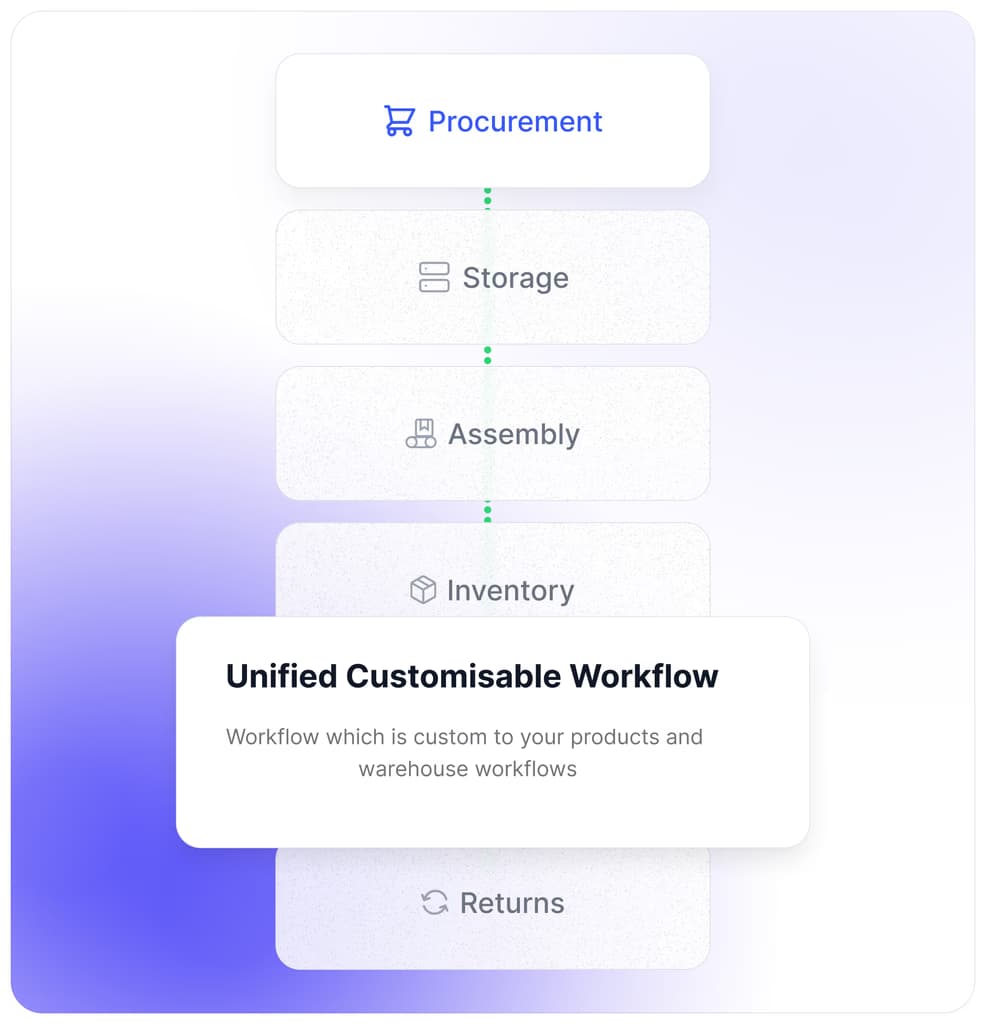
Warehouse confirms pick via scanner → system generates IRN and e-way bill from scanned quantities → dispatch proceeds → ERP receives the finished transaction. FilFlo runs this model for quick-commerce and PO-driven B2B channels: PO intake, SKU-level approvals, batch/expiry allocation, barcode picking, then IRN + e-way bill at dispatch confirmation. ERP (Dynamics 365 live; Tally/Zoho export) receives clean posted events. This model is necessary when operational truth lives in the warehouse, not the accounting desk.
ERP and Platform Comparison
| Platform | Automation model | IRN + e-way bill together | Dispatch-embedded | Typical user |
|---|---|---|---|---|
| TallyPrime | ERP-native | Yes — GST module | No — desk invoicing | SMB distributors, manufacturers |
| SAP S/4HANA / B1 | ERP-native + localization | Yes — India GST pack | No — unless WM integrated | Enterprise manufacturing, distribution |
| Microsoft Dynamics 365 | ERP-native + extensions | Yes — GST extensions | No — unless ops tool feeds | Mid-enterprise brands on D365 |
| Zoho Books | ERP-native (cloud) | Yes | No | Cloud-first mid-market |
| Marg ERP | ERP-native | Yes | No | Retail, pharma distribution |
| Clear / Masters India | Compliance bolt-on | E-invoice + e-way bill APIs | No — fed by export | Multi-GSTIN compliance ops |
| FilFlo | Workflow-embedded | Yes — at dispatch confirmation | Yes — scanner-driven | FMCG/D2C quick commerce + PO channels |
For a broader vendor landscape, see our top 10 e-way bill solutions in India guide.
TallyPrime, SAP, and Dynamics — Practical Notes
TallyPrime remains the default for Indian distributors and manufacturers whose accountant lives in Tally. E-way bill generation from sales invoices is mature and widely understood by CAs. The limitation is operational: if warehouse staff pick different quantities than the desk invoice assumed, the e-way bill reflects the desk, not the dock.
SAP (S/4HANA for enterprise, Business One for mid-market) automates e-way bills through India GST localization — integrated with SD/MM modules when implemented correctly. SAP WM or EWM can feed dispatch quantities, closing the desk-vs-dock gap, but that integration is an implementation project, not out-of-box for most Indian deployments.
Microsoft Dynamics 365 supports e-way bill generation through GST extensions on Business Central and Finance & Operations. FilFlo syncs live with Dynamics 365 — approved PO orders push in, invoices and e-way bills generated at dispatch in FilFlo post back. Dynamics holds the ledger; FilFlo holds the dispatch truth. Brands like Anveshan, Sleepy Owl, and Jimmy's use this pattern for quick-commerce channels.
Zoho Books and Marg ERP serve cloud-first mid-market and retail/pharma distribution respectively. Both generate e-way bills from invoices with GSP configuration. Same ERP-native constraint applies: generation quality equals invoice data quality at creation time.
Generate E-Way Bills From What Actually Shipped
See IRN and e-way bill generation tied to scanner-confirmed dispatch on a quick-commerce PO — then synced to Dynamics 365 or exported to Tally.
Decision Framework: Which Model to Buy
Answer these four questions in order. The first "yes" pointing away from ERP-native tells you which model fits.
- Does dispatch happen in ERP? If yes — same person creates invoice and confirms shipment — ERP-native (Tally, SAP, Dynamics, Zoho, Marg) is sufficient. If no — warehouse runs picking in WMS, ops tool, or spreadsheets — you need workflow-embedded or a tight WMS-to-ERP feed.
- Do quantities change between order approval and dispatch? Quick-commerce POs with SKU-level cuts, batch/expiry allocation, and scanner-verified picks routinely do. ERP-native e-way bills generated from the original PO overstate movement. Workflow-embedded generation from scanned quantities fixes this.
- Is your ERP GST localization current? Older ERP versions without India GST packs need a compliance bolt-on (Clear, Masters India) regardless of dispatch model. Verify GSP credentials, HSN master sync, and cancellation workflow before go-live.
- Do you run PO-driven B2B alongside consumer parcels? Consumer parcels often tolerate ERP-native or OMS-level generation. PO channels (Blinkit, Zepto, modern trade) need IRN + e-way bill + GRN in one event trail — the O2C ops layer FilFlo provides, not a bolt-on on top of a parcel OMS.
Where FilFlo Fits — and Where It Does Not
FilFlo is an O2C operations layer for FMCG/D2C brands on quick commerce and PO-driven B2B channels. It is not an ERP, not a full accounting suite, and not a compliance bolt-on you feed with CSV exports. It is where dispatch happens: PO intake, approvals, picking with batch/expiry/FIFO allocation, barcode scanning, GST invoice with IRN, and e-way bill — generated together from confirmed quantities at the dispatch moment.
Downstream, FilFlo continues into GRN capture, invoice-vs-GRN variance, and credit notes from platform settlement files. Upstream, it syncs live to Microsoft Dynamics 365 and exports to Tally and Zoho. ERP remains the accounting system of record; FilFlo ensures the e-way bill and invoice reflect what the warehouse actually shipped before ERP sees them.
FilFlo does not replace Tally or SAP for branch-transfer e-way bills, purchase-side compliance, or businesses that invoice from a desk without warehouse scanning. It does not serve consumer-parcel OMS lifecycles — high-volume B2C shipments with courier allocation belong in a B2C OMS, not an O2C ops tool.
For the full PO lifecycle including e-way bills in context, see our quick-commerce order-to-cash guide or the OMS vs O2C boundary article.
Frequently Asked Questions
Which ERP software in India has native e-way bill automation?
TallyPrime generates e-way bills directly from sales invoices and delivery notes through its GST module — the most widely deployed option for Indian SMBs and distributors. SAP S/4HANA and SAP Business One automate e-way bills through India GST localization packs connected to GSP APIs. Microsoft Dynamics 365 (Business Central and Finance & Operations) supports e-way bill generation via GST extensions and partner connectors. Zoho Books generates e-way bills from invoices for cloud-first mid-market teams. Marg ERP serves retail and distribution with built-in e-way bill generation. All require valid invoice data (GSTIN, HSN, value, distance) and GSP credentials configured before automation works reliably.
What is the difference between ERP-native and workflow-embedded e-way bill automation?
ERP-native automation generates the e-way bill from the accounting invoice — typically after someone creates the invoice in ERP and clicks generate, or via a batch job. Workflow-embedded automation generates the e-way bill at the operational dispatch moment — when the warehouse scans the last item, confirms the vehicle, and prints the invoice/IRN together. ERP-native works when dispatch and invoicing happen in ERP. Workflow-embedded works when dispatch runs in an ops tool (FilFlo, WMS, OMS) and ERP receives the finished transaction. FMCG brands dispatching quick-commerce POs with appointment windows and scanner-based picking usually need workflow-embedded generation; distributors invoicing from Tally at a desk tolerate ERP-native.
Can I use a compliance bolt-on instead of ERP e-way bill modules?
Yes — GSP-connected platforms (Clear, Masters India, dedicated e-way bill portals) generate e-way bills by pulling invoice data from ERP exports or API feeds. This works when ERP GST depth is thin or the ERP version lacks India localization. The trade-off: the bolt-on must receive clean invoice data (correct GSTIN, HSN, quantities, transporter ID) or generation fails at the gate. Bolt-ons excel at bulk generation, cancellation, and extension; they do not replace the operational step of knowing what actually shipped. For a full vendor comparison, see our guide to the top e-way bill solutions in India.
Does FilFlo generate e-way bills, and how does it connect to ERP?
Yes. FilFlo generates GST invoices with IRN and e-way bills inside the dispatch workflow for FMCG/D2C brands on quick commerce and PO-driven B2B channels — at the moment warehouse staff confirm dispatch, not as a separate accounting step. FilFlo syncs approved orders and invoices live to Microsoft Dynamics 365 and exports to Tally and Zoho. FilFlo is not an ERP or full accounting suite — it is the O2C ops layer where dispatch happens. ERP remains the ledger; FilFlo ensures the e-way bill is tied to what was actually picked and scanned, then posts clean events upstream.
When does e-way bill automation fail in practice?
The common failure modes are data, not software: invoice raised before quantities were finalized (e-way bill value does not match what shipped), wrong transporter ID or vehicle number entered manually, distance miscalculated for multi-stop routes, IRN generated on a cancelled or amended invoice, and e-way bill generated in ERP while dispatch happened in a separate WMS with different quantities. Automation assumes the upstream invoice data is correct and current. Brands running dispatch in one system and invoicing in another need the e-way bill generated at the system that knows what actually left the warehouse — otherwise compliance documents and physical goods diverge.
E-Way Bills That Match the Dock, Not the Desk
FilFlo generates IRN and e-way bills at scanner-confirmed dispatch for quick-commerce and PO channels — synced to Dynamics 365, Tally, or Zoho.
Tally, SAP, Microsoft Dynamics 365, Zoho, Marg ERP, Clear, Masters India, Blinkit, Zepto, Swiggy Instamart, and all other product and platform names are trademarks of their respective owners. Their mention here describes workflows only and implies no endorsement.